
According to Winham and Hampl’s journal entitled “Adolescents
report television characters do not influence their self-perceptions of body
image, weight, clothing choices or food habits”, a survey was done to study the
importance of physical attractiveness and health-related behaviors in making an
individual attractive to the respondent (2008). The results were that most high
school students rated the television characters as neither under or over
weight. Also, more girls than boys stated that the television characters wore
revealing clothes. Respondents, on an average, based on the likert scale, also
felt that the television depicting life accuracy was somewhat accurate. The
importance of attractiveness of television characters was vastly different
between both boys and girls, depending on their BMI and other factors. Lastly,
more than half the boys and girls surveyed denied that the television
characters influenced their eating habits and food intake.
The next academic literature, which is Heather's journal on Reality Tv's effects on Teens focuses on the subject of how reality television uses coarseness and shock value in order to gain viewers (2011). She argues that the effects of reality television on teenagers and young adults go beyond emotional and psychological effects. Instead, the effects of such shows are much greater than that. In addition to that, the effects of reality television also pushes the limit to a new world of relational agression, which is essentially, bullying.
On the other hand, in a nutshell, Cherry's dissertation on "Reality TV and Interpersonal Relationship Perceptions discusses the relationship between viewers and their motives for viewing reality television as well as the outcomes that reality television viewers understood from the experience of watching such shows (2008). The results were that viewers who were surveyed mostly watched shows that they found interesting as it aligned with their hobbies and interests, or had characters to whom they could relate to.
To end it, the thesis entitled "Portrayals of women in prime time reality TV programs" found that women were positively portrayed in the various reality shows that were studied (Martinez-Shephard, 2006). It was also found that the most popular types of reality shows were talent contests and job searches, with dating shows and game shows being the least popular. On the other hand, the main focus was that the females were portrayed as career professionals instead of playing domestic roles in reality television.
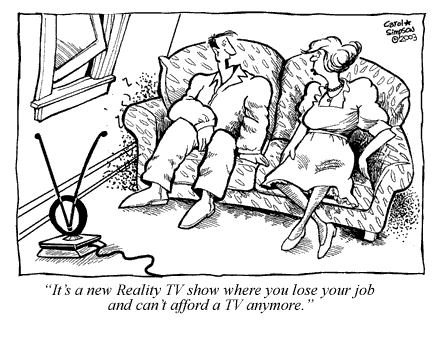
The picture above reflects how the reality television is constantly evolving as a genre, and it is not a mediocre genre. The subtle humor of the cartoon is that the family cannot afford a television, however the man makes a joke that the reason that there is no television is because they are starring in a reality television show where the contestants lost their jobs, and therefore cannot afford a television set anymore.

No comments:
Post a Comment